SERVANT LEADERSHIP
Abstract
This article explores the concept of Church leadership from a theological, biblical, and pastoral perspective, with particular emphasis on servant leadership as the authentic Christian model. Drawing from classical leadership theories, magisterial teachings of the Church, Sacred Scripture, and the life of the Blessed Virgin Mary, the study presents leadership not as domination but as service rooted in faith, humility, and obedience. The Blessed Virgin Mary is proposed as the exemplary model of servant leadership, especially within the context of the Catholic Diocese of Murang’a’s celebration of the Year of Mary. The article concludes by identifying key virtues necessary for effective Christian leadership and situating them within the communal life of the Church.
- Introduction
Leadership within the Church transcends administrative responsibility and enters the realm of vocation and mission. Unlike secular paradigms that often emphasize authority, influence, and control, Christian leadership is fundamentally rooted in discipleship and service. The Church proposes a model of leadership grounded in the example of Christ, who redefines greatness through humility and sacrifice: “Whoever would be great among you must be your servant” (Matthew 20:26).
In this context, servant leadership emerges as the most authentic expression of ecclesial authority. This article seeks to examine the theological foundation of servant leadership, explore its biblical roots, analyze various leadership models, and present the Blessed Virgin Mary as the archetype of Christian leadership.
- The Concept of Servant Leadership
2.1 Classical and Contemporary Perspectives
The concept of servant leadership was systematically articulated by Robert K. Greenleaf (1970), who defined it as leadership that begins with the desire to serve. According to Greenleaf, the servant-leader prioritizes the growth and well-being of others and of the communities to which they belong.
Larry Spears (1995), building on Greenleaf’s work, identifies key characteristics of servant leadership, including listening, empathy, healing, awareness, persuasion, foresight, stewardship, and commitment to the growth of others. Similarly, Ken Blanchard emphasizes that servant leadership focuses on empowering others rather than exercising control over them.
2.2 Ecclesial Understanding of Servant Leadership
Within the Church, servant leadership is deeply rooted in the life and ministry of Christ. The Second Vatican Council emphasizes that authority in the Church must always be exercised as service. This is further reinforced in Pastores Dabo Vobis, where St. John Paul II describes priestly leadership as an expression of pastoral charity, modeled on Christ the Good Shepherd.
Pope Francis, in Evangelii Gaudium, calls for leaders who are close to the people, famously stating that shepherds must “have the smell of the sheep.” This imagery underscores the relational and incarnational nature of Christian leadership.
2.3 Working Definition
Servant leadership in the Church can thus be defined as the capacity to lead by serving, guiding others through love, humility, and obedience to God’s will, while prioritizing the spiritual and human development of the community.
- Models of Leadership
Leadership studies identify various models that help illuminate different approaches to guiding communities:
Autocratic Leadership:
Characterized by centralized decision-making, often efficient but potentially suppressive of participation.
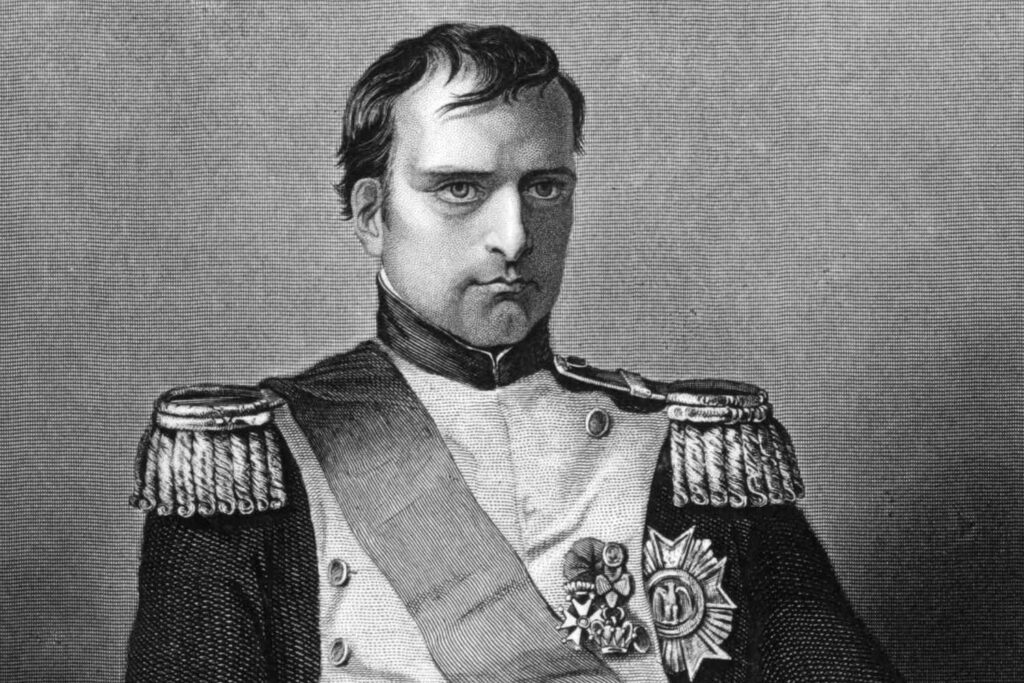
Example: Napoleon Bonaparte
Napoleon exercised strong centralized control, making decisions independently and expecting strict obedience. His leadership brought efficiency and rapid results, especially in military organization, but often suppressed participation and dissent. This model shows how authority can achieve order, yet risks limiting collaboration.
Democratic Leadership:
Encourages shared decision-making and fosters communal responsibility.
Example: Nelson Mandela
Mandela promoted inclusive leadership by involving others in decision-making and fostering unity after apartheid. He listened to diverse voices and encouraged shared responsibility. His leadership reflects how participation builds trust, reconciliation, and communal ownership.
Transformational Leadership:
Inspires change through vision and motivation, focusing on personal and communal growth.
Example: Martin Luther King Jr.
He inspired change through a powerful vision of equality and justice. His speeches and actions motivated people to transform society peacefully. Transformational leadership focuses on changing hearts and structures, elevating both individuals and communities.
Transactional Leadership:
Based on structured systems of reward and punishment.
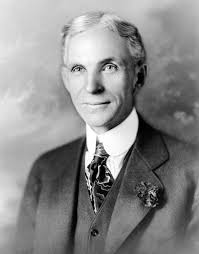
Example: Henry Ford
Ford applied structured systems in his factories, rewarding productivity and enforcing strict standards. His leadership improved efficiency and output but focused more on performance than personal development. This model
highlights organization and results through clear expectations.
Charismatic Leadership:
Relies on personal influence and appeal, though it risks dependency on the leader.
Example: John F. Kennedy
Kennedy’s personal charm, communication skills, and vision inspired many people, especially the youth. His leadership drew followers through personality and influence. However, charismatic leadership can risk dependency if not grounded in strong structures or values.
Servant Leadership:
Centers on the needs of others, aligning closely with the Gospel model of leadership.
Example: Mother Teresa 1.
Mother Teresa lived a life of service to the poorest of the poor. She led by example; serving, loving, and uplifting others. Her leadership reflects Christ’s teaching: leadership rooted in humility, sacrifice, and compassion.
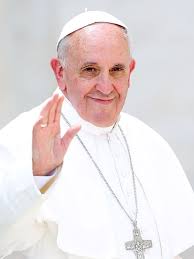
Example: Pope Francis 2.
He emphasizes simplicity, closeness to people, and care for the marginalized, embodying servant leadership in the modern Church.
Among these, servant leadership remains the most consistent with Christian theology, as it reflects the life and mission of Christ.
- Leadership in Sacred Scripture
4.1 Old Testament Models
Leadership shaped by obedience, faith, and relationship with God
The Old Testament offers rich and diverse models of leadership, all rooted in a deep relationship with God. These leaders were not perfect, but they were chosen, formed, and guided by God. Their leadership was effective because it was grounded in listening, trust, repentance, vision, and action.
- Moses – Listening and Mediating Leader
Moses teaches that leadership begins with listening to God and is sustained through humility and intercession. A leader must first encounter God before guiding others. Exodus 3:1–12; Exodus 18:13–23; Numbers 12:3. A leader formed through encounter with God
Qualities of Leadership:
- Attentive listening: Moses encounters God in the burning bush and listens before acting (Exodus 3:4–6).
- Humility: “Now the man Moses was very meek, more than all people…”(Numbers 12:3).
- Obedience: He accepts God’s mission despite fear and hesitation (Exodus 4:10–12).
- Intercessory leadership: He stands between God and the people (Exodus 32:11–14).
- Delegation: On Jethro’s advice, he shares responsibility (Exodus 18:17–23).
- Abraham – Faith-Based and Obedient Leader
Abraham shows that leadership is rooted in trust. A leader must be willing to step into the unknown, guided only by faith in God’s promises. Genesis 12:1–4; Genesis 15:6; Genesis 22:1–18. A leader of faith and trust.
Qualities of Leadership:
- Faith: “And he believed the Lord; and he reckoned it to him as righteousness” (Genesis 15:6).
- Obedience: Leaves his homeland without knowing the destination (Genesis 12:1–4).
- Trust in uncertainty: Walks with God without full understanding.
- Sacrificial spirit: Willing to offer Isaac (Genesis 22:2–12).
- Covenantal leadership: Leads his family into a relationship with God.
- David – Pastoral and Repentant Leader
David teaches that leadership is not about perfection but about a heart that continually returns to God. True leaders acknowledge their weaknesses and seek conversion. 1 Samuel 16:7; Psalm 23; Psalm 51. A shepherd king after God’s heart
Qualities of Leadership:
- God-centered heart: “Man looks on the outward appearance, but the Lord looks on the heart” (1 Samuel 16:7).
- Courage: Faces Goliath with faith (1 Samuel 17:45–47).
- Pastoral care: Leads like a shepherd (Psalm 23).
- Repentance: Acknowledges sin and seeks forgiveness (Psalm 51:1–4).
- Worship leadership: Brings the Ark of the Covenant to Jerusalem (2 Samuel 6:14–15).
- Nehemiah – Visionary and Strategic Leader
Nehemiah shows that leadership requires both prayer and action. Vision without prayer is empty, and prayer without action is incomplete. Nehemiah 1:4–11; Nehemiah 2:17–18; Nehemiah 4:6. A leader of vision, action, and prayer
Qualities of Leadership:
- Prayerful discernment: Begins with prayer and fasting (Nehemiah 1:4).
- Vision: Inspires people to rebuild Jerusalem (Nehemiah 2:17).
- Motivation: Encourages unity and commitment (Nehemiah 4:6).
- Resilience: Overcomes opposition and discouragement (Nehemiah 4:7–9).
- Strategic planning: Organizes people effectively for the mission.
4.2 New Testament Models
Leadership fulfilled in Christ and lived out in the Apostolic Church
The New Testament presents the fullness of leadership in the person of Christ and its continuation in the Apostles. Here, leadership is no longer only preparation but fulfillment; centered on love, sacrifice, mission, and the guidance of the Holy Spirit.
- Jesus Christ – The Perfect Servant Leader
Jesus redefines leadership: it is not about being served but serving. True authority is expressed through love, humility, and total self–giving. He is the ultimate model of servant leadership for all Christians. John 13:1–15; Mark 10:45; Philippians 2:5–8. The Servant who leads through love and sacrifice
Qualities of Leadership:
- Servanthood: “He… began to wash the disciples’ feet” (John 13:5).
- Humility: “He emptied himself, taking the form of a servant” (Philippians 2:7).
- Sacrificial love: “The Son of Man came… to give his life as a ransom for many” (Mark 10:45).
- Authority with compassion: Teaches with authority but serves with mercy (Matthew 9:36).
- Obedience to the Father: “Not my will, but yours be done” (Luke 22:42).
- Formation of others: Invests in disciples and prepares them for mission (Matthew 28:19–20).
- Saint Peter – Pastoral Leader Formed Through Weakness
Peter teaches that leadership is not reserved for the perfect, but for the converted. True leaders grow through failure, repentance, and reliance on God’s grace. Luke 5:8–11; Luke 22:61–62; John 21:15–17. A leader shaped by failure, repentance, and restoration
Qualities of Leadership:
- Humility through weakness: “Depart from me, for I am a sinful man” (Luke 5:8).
- Repentance: “He went out and wept bitterly” after denying Jesus (Luke 22:62).
- Restoration and mission: “Feed my sheep” (John 21:17).
- Pastoral care: Entrusted with shepherding God’s people.
- Growth in courage: Preaches boldly at Pentecost (Acts 2:14–41).
- Dependence on grace: Leadership rooted not in perfection but in God’s mercy.
- Saint Paul – Missionary and Transformational Leader
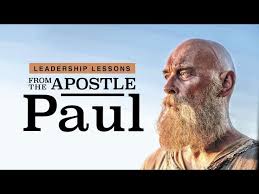
Paul demonstrates that leadership is missionary by nature. A true leader is sent, sacrifices for the mission, and remains faithful to the end. Acts 9:1–19; 1 Corinthians 9:16; 2 Timothy 4:7. A missionary leader driven by zeal for the Gospel
Qualities of Leadership:
- Conversion: Radical transformation from persecutor to apostle (Acts 9:3–6).
- Zeal for mission: “Woe to me if I do not preach the Gospel!” (1 Corinthians 9:16).
- Sacrifice: Endures suffering, imprisonment, and persecution (2 Corinthians 11:23–28).
- Perseverance: “I have fought the good fight… I have kept the faith” (2 Timothy 4:7).
- Adaptability: Becomes “all things to all people” (1 Corinthians 9:22).
- Doctrinal clarity: Teaches and defends the truth of the Gospel.
5. THE BLESSED VIRGIN MARY AS MODEL OF LEADERSHIP
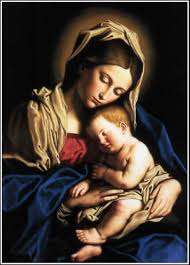
(Within the context of the Year of the Blessed Virgin Mary in the Catholic Diocese of Murang’a,) Mary emerges as the quintessential model of Christian leadership. Her leadership is not institutional but relational, not authoritative but responsive to God’s will.
Mary is characterized by attentiveness to God, discernment through faith, and obedience without resistance. Her response to the angel—“Let it be done to me according to your word” (Luke 1:38)—encapsulates the essence of servant leadership.
Qualities of Servant Leadership in the Life of Mary
5.1 Faith
Faith is the total trust in God, believing in His word and promises even without full understanding or visible evidence.
Mary’s faith is seen in her response to the angel: “How can this be?” (Luke 1:34). This question is not doubt but discernment—a desire to understand God’s will more deeply. Her final response, “Let it be done to me according to your word” (Luke 1:38), reveals complete trust and surrender. Mary teaches that true faith does not eliminate questions but leads to deeper trust in God’s plan, even when it surpasses human logic.
5.2 Humility
Humility is the recognition of one’s dependence on God and the willingness to place oneself at His service without seeking self-glory.
Mary expresses profound humility when she says, “Behold, I am the handmaid of the Lord” (Luke 1:38). She acknowledges her lowliness and openness to God’s will. This humility is further echoed in the Magnificat: “He has looked on the lowliness of his servant” (Luke 1:48). Mary shows that true leadership is rooted not in self-exaltation but in surrender and availability to God.
5.3 Obedience
Obedience is the loving and faithful response to God’s will, expressed through action and commitment.
Mary’s life is a continuous act of obedience, beginning with her “yes” at the Annunciation (Luke 1:38). Her obedience is not momentary but sustained throughout her life, even in uncertainty and suffering. She listens, accepts, and acts according to God’s will, showing that obedience is not passive submission but active cooperation with divine purpose.
5.4 Compassion
Compassion is the ability to recognize the suffering or need of others and to respond with love and concern.
At the wedding at Cana (John 2:1–12), Mary notices the need of the couple—“They have no wine” (John 2:3)—and brings it to Jesus. She does not wait to be asked but responds with sensitivity and care. Her compassion leads to intercession, showing that true leaders are attentive to the needs of others and act to alleviate them.
5.5 Service
Service is the selfless giving of oneself for the good of others, motivated by love and faith.
Mary’s visit to Elizabeth demonstrates active service: “Mary set out and went with haste” (Luke 1:39). Her response to God’s call leads immediately to action. She does not remain in comfort but goes out to serve. This teaches that authentic faith is not passive but expresses itself in concrete acts of love and assistance.
5.6 Perseverance
Perseverance is steadfastness in faith and commitment despite trials, suffering, or challenges.
Mary’s perseverance is revealed in Simeon’s prophecy: “A sword will pierce your own soul also” (Luke 2:35), and fulfilled at Calvary: “Standing by the cross of Jesus was his mother” (John 19:25). She remains faithful even in suffering. Mary teaches that true discipleship involves enduring hardship with trust and remaining committed to God’s will.
5.7 Prayerfulness
Prayerfulness is a constant orientation of the heart toward God through communication, reflection, and dependence on Him.
Mary is found in prayer with the early Church: “All these devoted themselves with one accord to prayer… together with Mary” (Acts 1:14). Her life reflects a deep communion with God. Prayer sustains her faith and mission, reminding us that leadership must be rooted in a strong spiritual life.
5.8 Surrender
Surrender is the total offering of one’s will to God, trusting Him completely in all circumstances.
Mary’s words at Cana, “Do whatever he tells you” (John 2:5), reveal her complete surrender to Christ. She directs others not to herself but to Jesus. Her entire life reflects openness to God’s plan, teaching that true leadership leads others to God and not to personal interests.
5.9 Gratitude
Gratitude is the recognition and appreciation of God’s blessings, expressed through praise and thanksgiving.
Mary’s Magnificat begins: “My soul magnifies the Lord, and my spirit rejoices in God my Savior” (Luke 1:46–47). Her prayer is filled with thanksgiving for God’s works. Gratitude keeps the heart humble and centered on God, reminding leaders that all they have and are comes from Him.
5.10 Courage
Courage is the strength to act according to God’s will despite fear, uncertainty, or risk.
Mary’s acceptance of God’s plan at the Annunciation (Luke 1:38) required great courage, as it exposed her to misunderstanding and hardship. Her journey of faith shows that courage is not the absence of fear but the willingness to trust God in the face of uncertainty.
5.11 Simplicity
Simplicity is a life free from unnecessary attachment, marked by sincerity, humility, and focus on God.
Mary lived a hidden and simple life, away from recognition and worldly status. Her offering at the Temple (Luke 2:22–24) reflects modest means. This simplicity reveals a heart centered on God rather than material or social status, teaching leaders to remain authentic and grounded.
5.12 Intercession
Intercession is the act of praying or pleading on behalf of others before God.
Mary’s role at Cana highlights her intercessory mission: “They have no wine” (John 2:3). She brings the needs of others to Jesus and trusts Him to act. This reveals her ongoing role as one who stands between God and humanity, teaching leaders the importance of praying for those entrusted to their care.
- The Communal Dimension of Leadership
Mary’s leadership unfolds within community. She participates in Temple worship (Luke 2:22–24) and remains with the early Church in prayer (Acts 1:14). This underscores that leadership in the Church is inherently communal, sustained by Scripture, Sacraments, and shared faith.
Organizations such as the Catholic Women Association exemplify this communal dimension, providing spaces for mutual support, discernment, and growth.
- Conclusion
Church leadership is fundamentally a call to service, rooted in faith, humility, and obedience. The Blessed Virgin Mary stands as the perfect model of this leadership, demonstrating that true authority arises from surrender to God’s will.
As Christian leaders, we are invited to emulate Mary’s attentiveness, trust, and fidelity. Leadership, therefore, becomes a lifelong journey of listening to God, serving others, and remaining steadfast in faith.
The prayer of Mary—“Let it be done to me according to your word” (Luke 1:38)—remains the ultimate expression of servant leadership and the guiding principle for all who seek to lead in the Church.
References
Greenleaf, R. K. (1970). The servant as leader. Indianapolis, IN: The Robert K. Greenleaf Center.
Spears, L. C. (Ed.). (1995). Reflections on leadership: How Robert K. Greenleaf’s theory of servant-leadership influenced today’s top management thinkers. New York, NY: John Wiley & Sons.
Blanchard, K., & Hodges, P. (2003). The servant leader: Transforming your heart, head, hands, and habits. Nashville, TN: Thomas Nelson.
Second Vatican Council. (1964). Lumen Gentium (Dogmatic Constitution on the Church). Vatican City: Libreria Editrice Vaticana.
THANKS FOR READING
Rev. Fr. Francis Kamau Mwangi (Wamaria) mariafranka22@gmail.com